

Ladder Fall Arrest Systems
Fall Protection for Fixed Ladder Access
Falls from vertical fixed ladders can happen quickly and are often difficult for workers to control. When a worker loses footing or grip, the fall usually moves backward away from the ladder, leaving little time to react or regain position.
A ladder fall arrest system provides continuous protection while the worker climbs. The worker connects to a vertical cable or rigid rail system, and a sleeve or traveler moves with them as they ascend or descend. If a slip occurs, the system locks onto the cable or rail to help arrest the fall before significant distance is traveled.
Planning ahead: OSHA requires ladder safety systems or personal fall arrest systems on fixed ladders over 24 feet. All existing systems must comply by November 18, 2036.

Compare Ladder Fall Arrest Solutions
Not every system is built for the same job. Some are ideal for new ladders, others retrofit the ladders you already have. Use these to find the fit for your facility, access conditions, and protection needs.
kattsafe ladder fall arrest system

Best For: New fixed ladder installations and complete roof access systems.
Highlights:
- Continuous hands-free protection
- Integrates directly with Kattsafe ladders and walkways
- Cable or rail-based system options
- Designed for elevated equipment and roof access
- Strong fit for new access system planning
Safewaze Ladder climbing systems
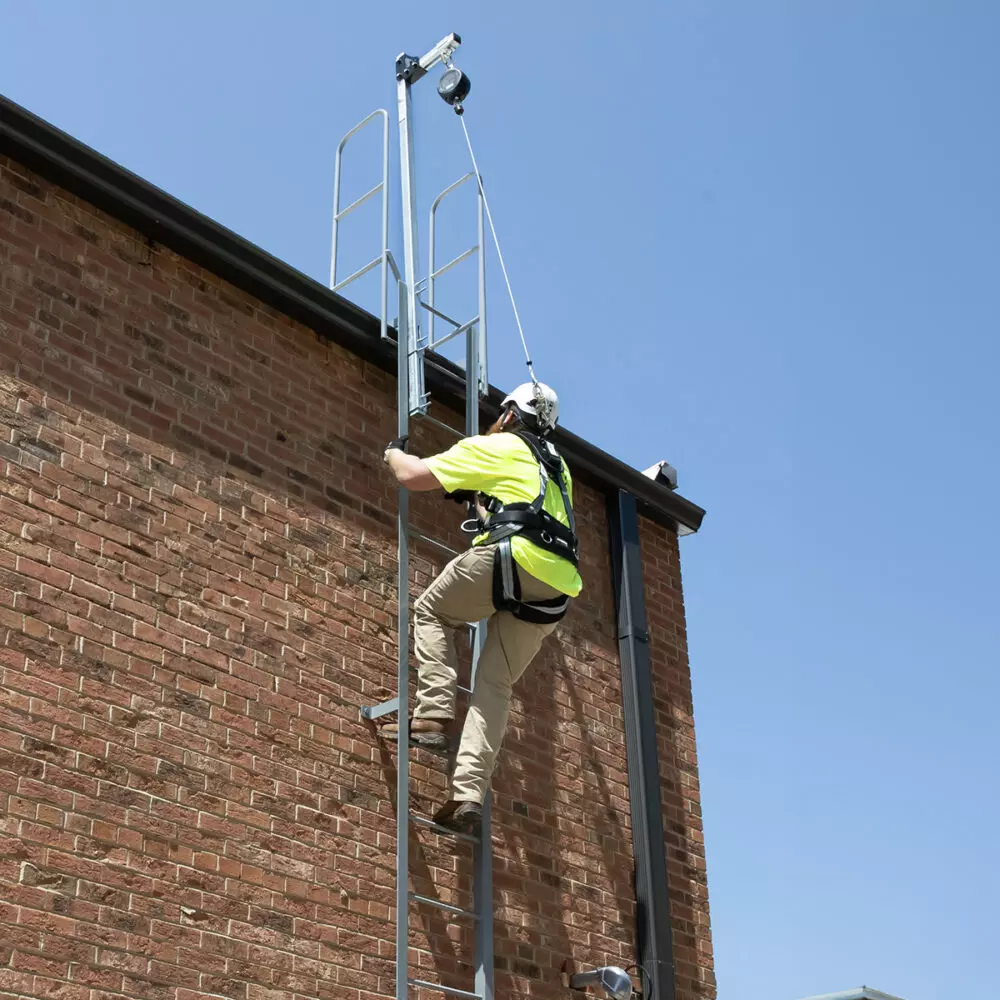
Best For: Retrofitting fall protection to existing fixed ladders.
Highlights:
- Cable-based ladder climbing systems
- Detachable sleeves and climbing devices
- Options for different ladder configurations
- Used with compatible front-attachment harnesses
- Strong fit for retrofit and replacement projects
Honeywell Miller GlideLoc System
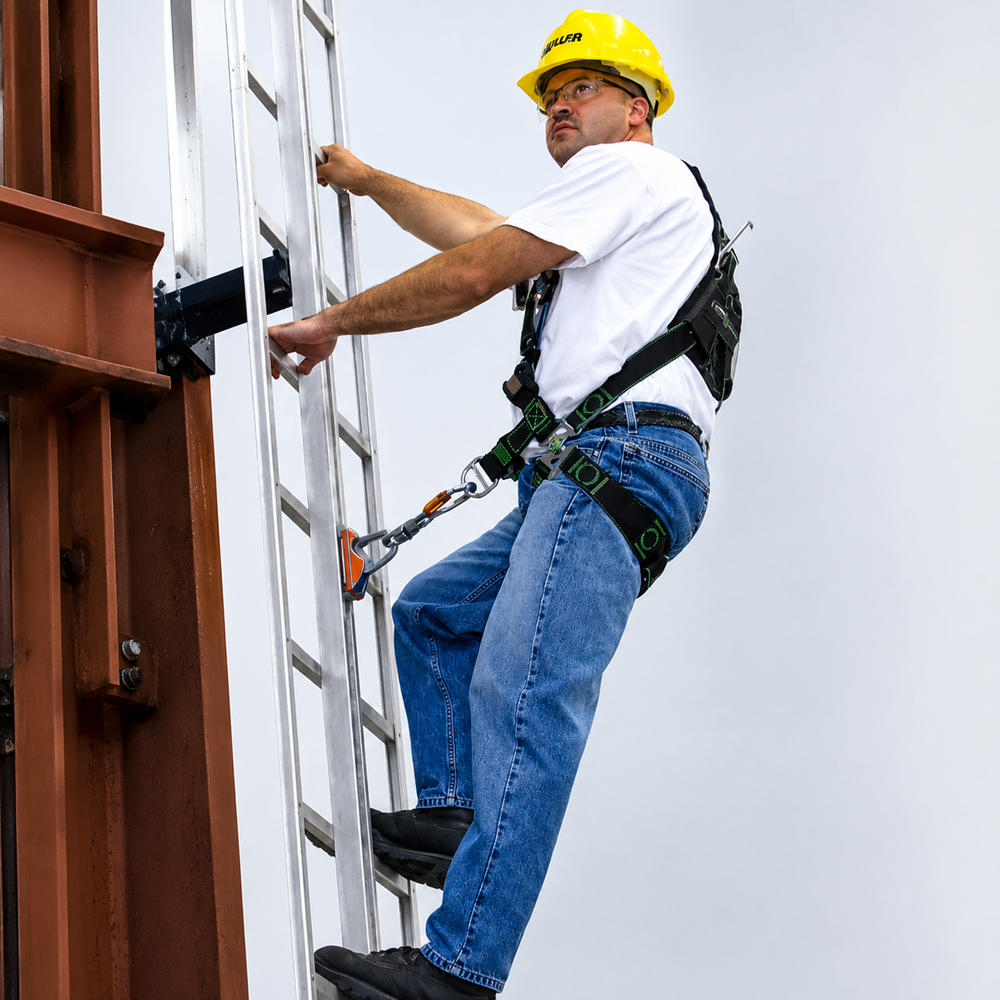
Best For: Heavy industrial facilities, utilities, and energy infrastructure.
Highlights:
- Rigid rail system with integrated fall arrester
- Hands-free, continuous connection while climbing
- Aluminum, galvanized, or stainless steel
- Rated for utilities, telecom, confined space, and energy
Not sure which systems fits your ladder?
Tell us the height, the access conditions, and how often it’s climbed, and we’ll point you to the right one.
How a Ladder Safety System Works
Whichever system you choose, the principle is the same: the climber stays connected to a fixed cable or rail system while moving up and down the ladder. The system must also be used with compatible harnesses, sleeves, and connectors specified by the manufacturer.
Compatible Harness
The worker wears a full-body harness with the correct ladder-climbing attachment point, often a front or sternal D-ring, as required by the system manufacturer.
Vertical Cable or Rigid Rail
A cable or rail is mounted to the fixed ladder and runs vertically along the climbing path.
Sleeve or Traveler
A sleeve or traveler moves with the climber and locks onto the cable or rail if a fall occurs.
Anchorage & Hardware
Top and bottom anchors, brackets, connectors, and mounting hardware must match the ladder, system, and application.
Quick Comparison Guide
The best system isn’t the most complex one. It’s the one that fits the ladder, the work, and how the worker gets on and off at the top. Use this as a starting point, then confirm specs with CH Bull.
| Solution | System Type | Best For | Retrofits Existing Ladder? | Harness / Connection Note |
| Kattsafe VL1 | Rail or cable-based | New installations | Best for new builds | Use manufacturer-approved harness, sleeve, and traveler |
| Safewaze Ladder Climbing Systems | Cable-based | Retrofit projects | Yes | Typically requires a front ladder-climbing attachment |
| Honeywell GlideLoc | Rigid rail-based | Heavy industrial | Yes | Typically requires a front ladder-climbing attachment |
Need help evaluating an existing ladder system?
CH Bull can assess ladder height, access conditions, roof transitions, harness compatibility, and inspection requirements to recommend the safest solution.
Common Questions
Tools & Resources
Videos
No resources found.
Related Resources
No posts
Protect Workers Before the First Climb
The right system depends on more than meeting code. It comes down to ladder height, roof access conditions, how workers exit at the top, and how often they climb. CH Bull assesses all of it and recommends the safest solution.