

Project Snapshop
Project: Galena Bridge Construction
Location: Reno, Nevada
Application: Bridge falsework lowering
Challenge: Transfer the bridge load from temporary supports to the completed arch
Solution: Synchronized 40-jack system with 7,400 tons of capacity
Result: Both bridge sections lowered until the arch became self-supporting
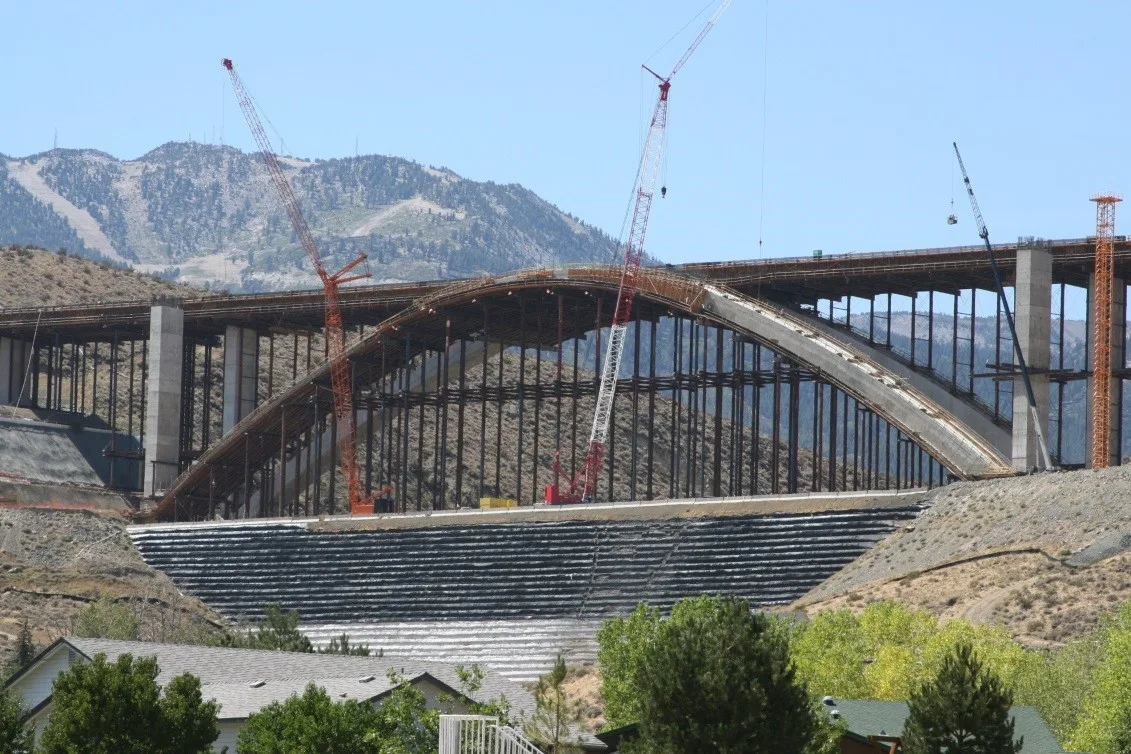
The Galena Bridge was constructed along Highway 395 south of Reno. Before construction began, the valley beneath the bridge was filled with thousands of cubic yards of soil to create a level working surface over the sloped terrain.
Extensive falsework was then erected to support the concrete forms while the arch and roadway structure were cast in place.
The Challenge
Once the concrete bridge was complete, the temporary falsework had to be lowered gradually so the weight of the structure could transfer safely to the arch.
The process required controlled, simultaneous movement across numerous support points. Uneven lowering could place unintended stress on the bridge or prevent the load from transferring uniformly.
As the falsework moved approximately three inches, the arch began taking on the load. Between five and six inches of movement, the temporary supports were no longer carrying the structure and the bridge became fully self-supporting.

Engineering the Jacking System
C.C. Myers worked with CH Bull to develop a hydraulic system capable of lowering the falsework slowly and evenly beneath the massive bridge structure.
CH Bull supplied a 40-jack system with a combined capacity of approximately 7,400 tons, or 14.8 million pounds. The system incorporated 100-, 200-, and 300-ton hydraulic jacks along with the pumps, manifolds, hoses, and gauges needed to control and monitor the operation.
Multiple jacks were connected through manifolds so crews could maintain comparable pressure across the different lifting points.
Field Execution and Support
The hydraulic system was used twice—once for each section of the bridge. During each operation, crews gradually lowered the falsework and monitored the load transfer until the completed arch supported the bridge independently.
CH Bull high-tonnage jacking specialist Stan Sheppard was onsite for both lowerings, working directly with the contractor’s crew throughout the process.

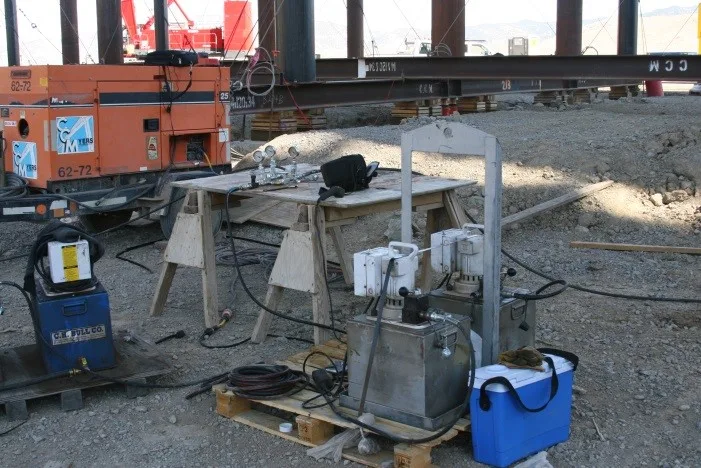

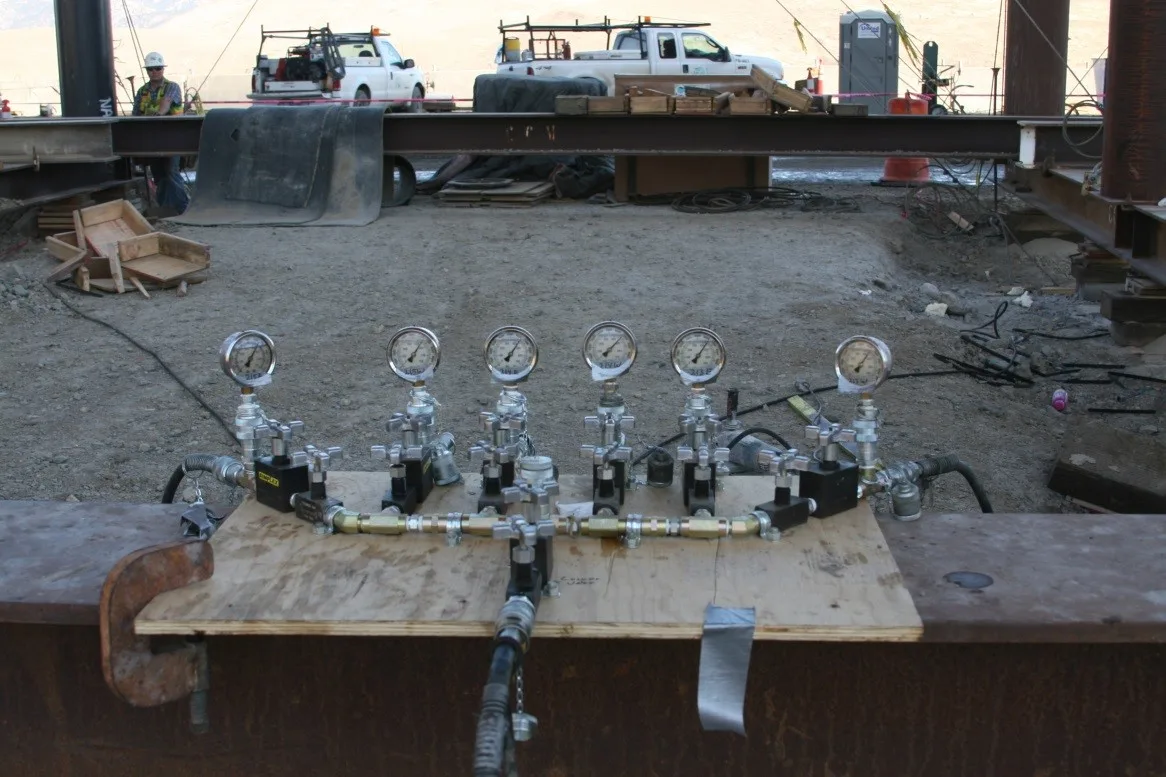
CH Bull also supplied a confined-space davit system so crews could safely access cavities within the cast concrete structure.

Project Outcome
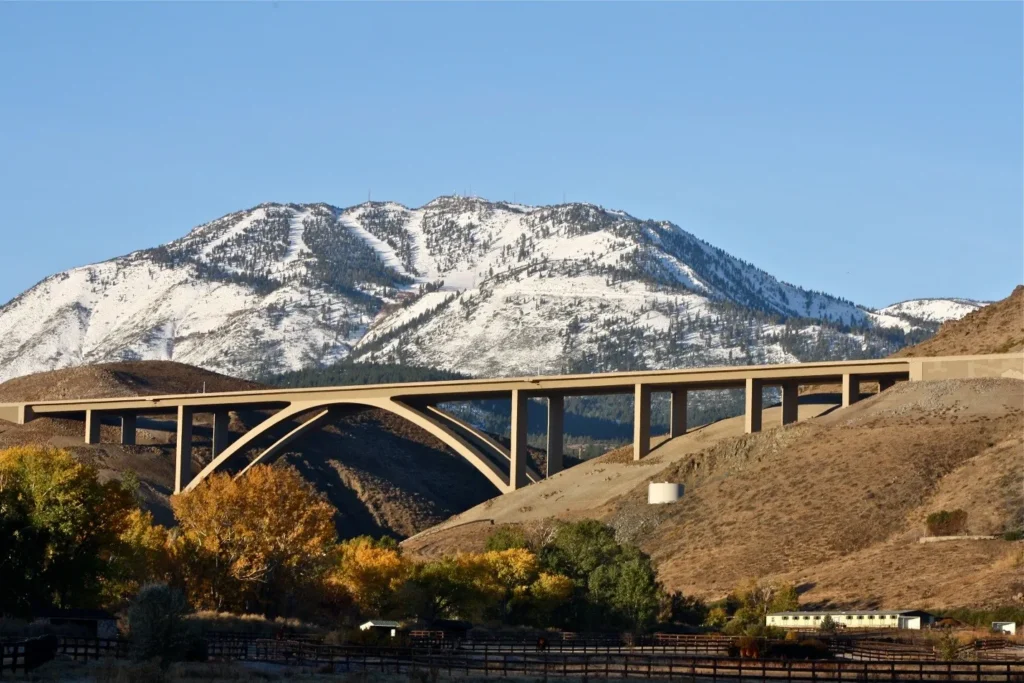
The synchronized jacking system allowed both sections of the Galena Bridge to transition from temporary falsework to a fully self-supporting arch.
By combining high-capacity hydraulic equipment with onsite support, CH Bull helped the contractor complete a carefully controlled load transfer across one of the project’s most critical construction stages.
Need Support for a Complex Jacking Project?
CH Bull supplies high-tonnage hydraulic jacks, pumps, manifolds, controls, and complete equipment systems for bridge construction, structural lifting, controlled lowering, and load transfer applications.