

Skylights provide natural light to commercial and industrial buildings, but they can also create serious fall hazards for workers accessing rooftops. Most skylights are not designed to support a person’s weight, and exposure to sunlight and weather can weaken older materials over time.
Whether you’re planning routine rooftop maintenance, installing solar panels, or replacing a roof, choosing the right skylight fall protection system is essential to worker safety.
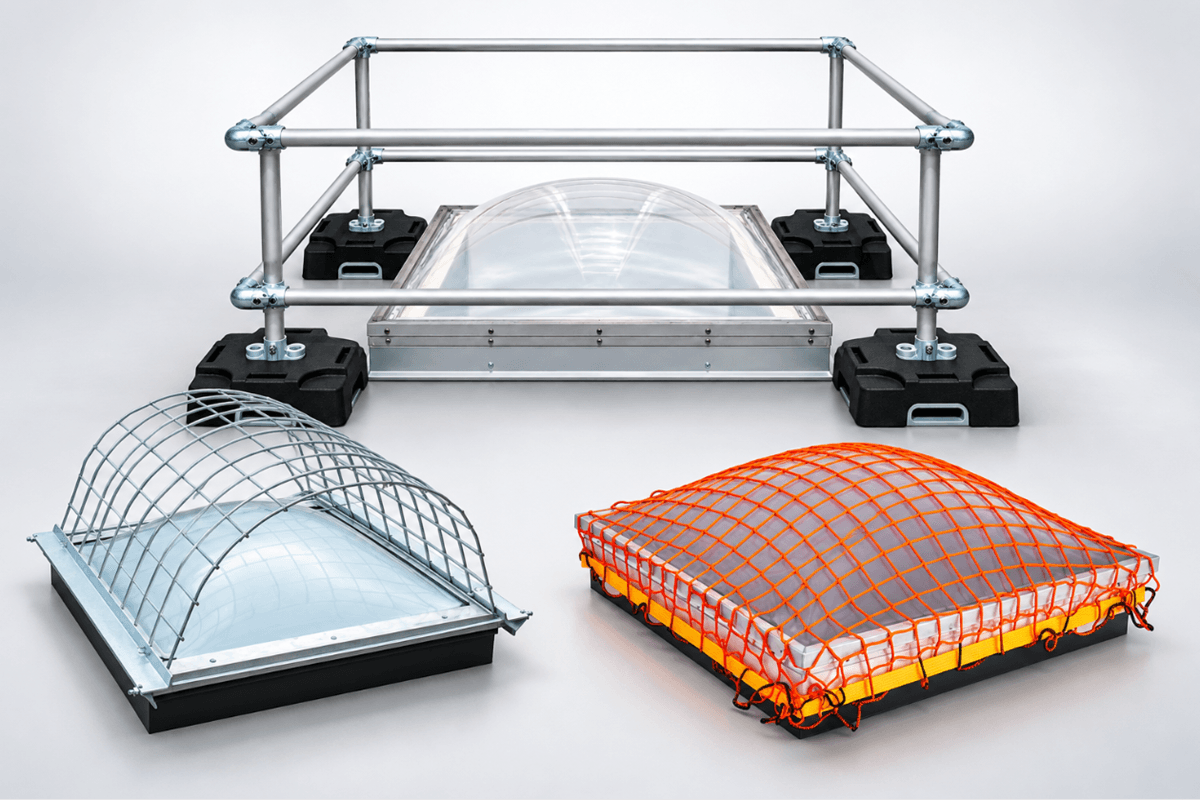
Why Skylights Require Fall Protection
Skylights should never be assumed safe to stand or step on. Workers performing rooftop maintenance, inspections, solar installations, or roof replacement can be exposed to serious fall hazards if skylight openings are not properly protected.
Comparing Skylight Fall Protection Options
| Protection Method | Best Suited For | Key Benefits |
| Skylight safety screens | Facilities requiring ongoing rooftop access | Permanent barrier that allows natural light through |
| Skylight guardrails | Skylights near frequently accessed work areas | Creates a physical barrier around the opening |
| Skylight safety nets | Temporary construction, reroofing, and skylight replacement | Designed to catch workers in the event of a fall |
Other fall protection methods, including protective covers and personal fall protection systems, may also be appropriate depending on the project and applicable safety requirements.
Explore CH Bull’s skylight protection systems to learn more about available screens, guardrails, and temporary safety nets.
Skylight Fall Protection Methods
Permanent Skylight Safety Screens
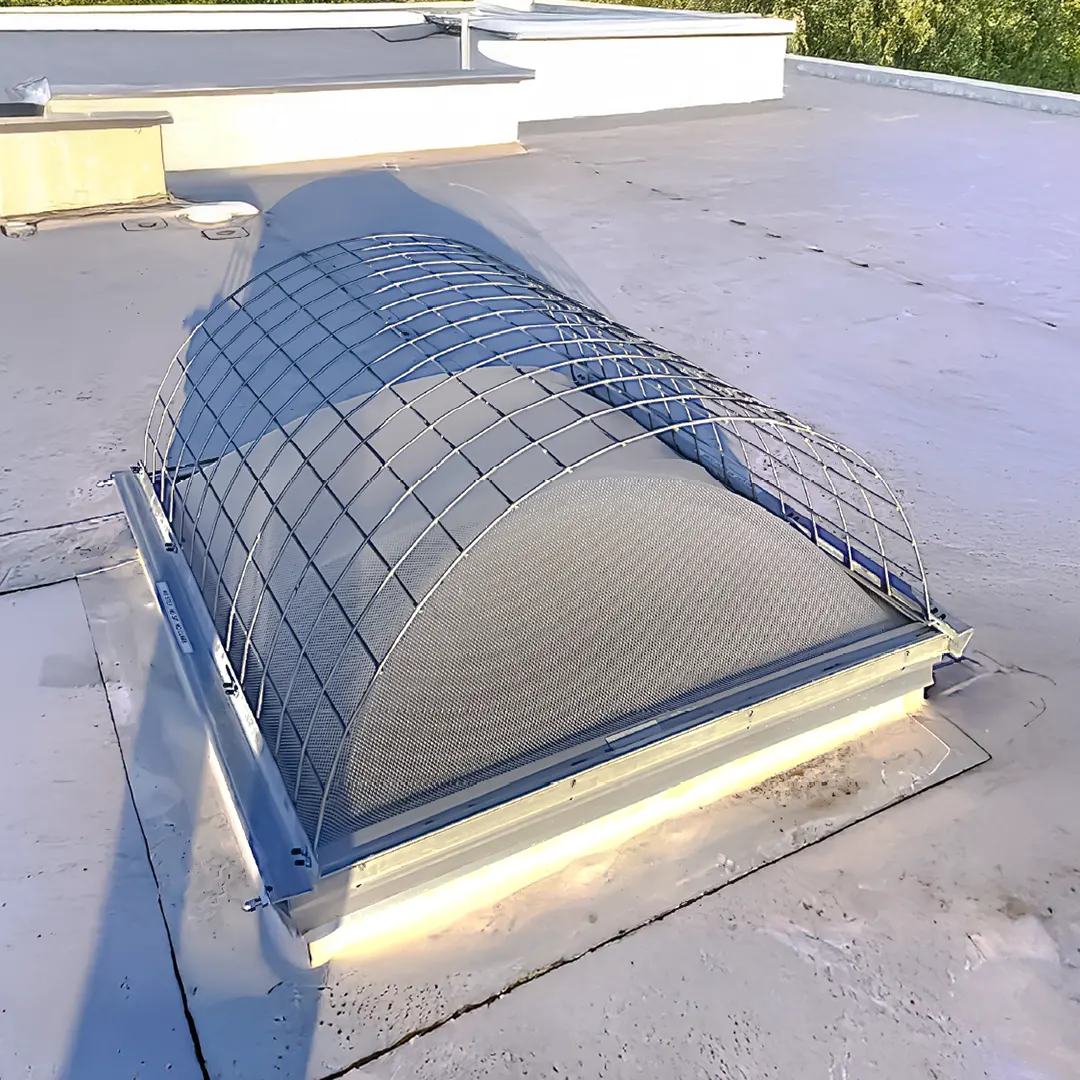
Metal skylight safety screens provide a fixed barrier over the skylight, helping prevent workers from falling through the opening. Their open-grid design allows daylight to pass through while maintaining protection.
These systems are well suited for warehouses, manufacturing facilities, and other buildings where maintenance crews regularly access the rooftop.
Many designs attach to the existing skylight frame without penetrating the roof membrane. CH Bull has installed skylight screens on numerous buildings as part of comprehensive rooftop fall protection plans.
Skylight Guardrails
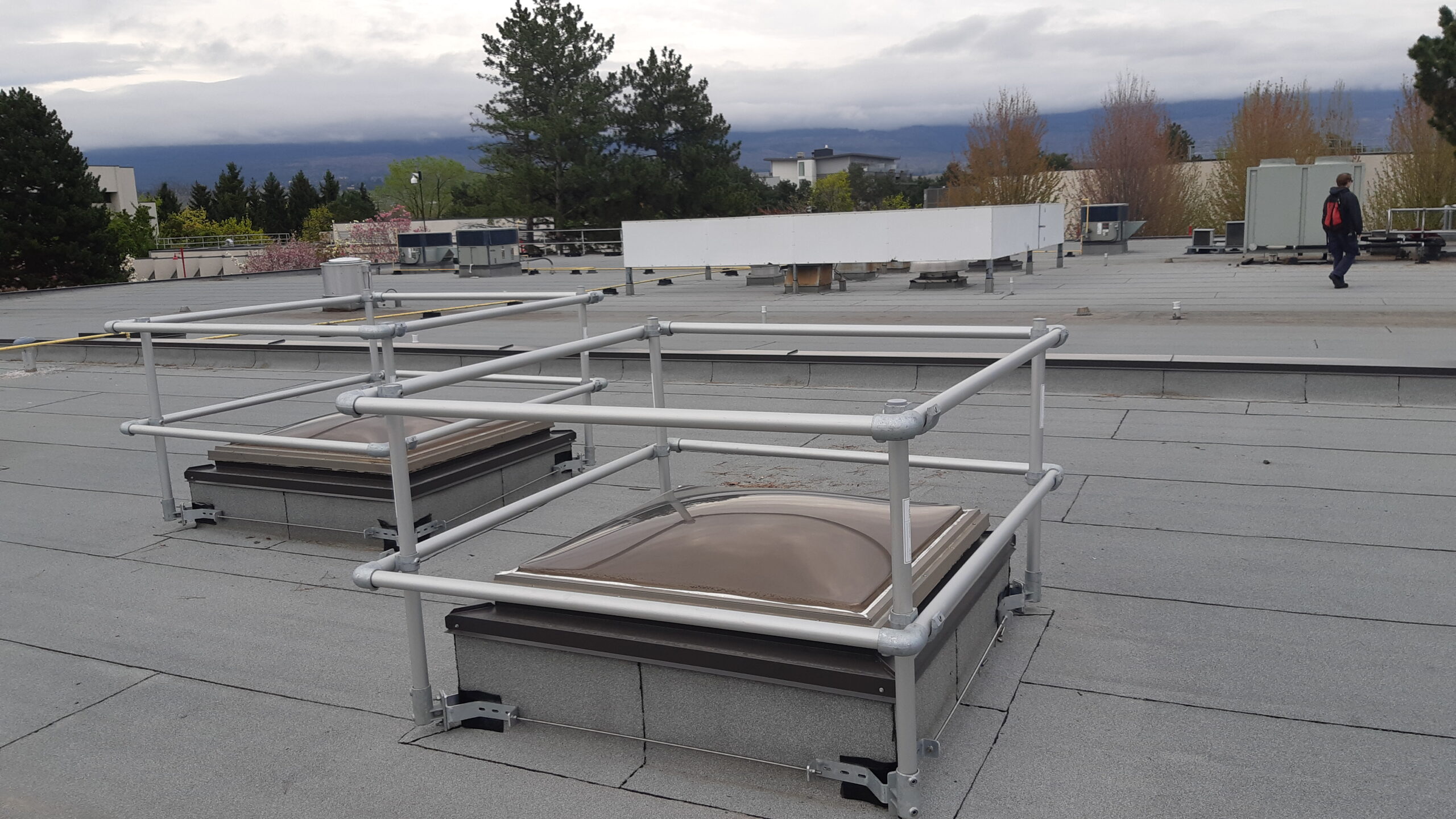
Skylight guardrails create a protective barrier around the perimeter of a skylight, keeping workers away from the hazardous opening.
They can be particularly useful in areas with frequent foot traffic or where workers need access to nearby rooftop equipment.
Depending on the skylight and roof configuration, guardrails may use curb-mounted clamps or freestanding counterweighted bases. Non-penetrating options can provide protection without requiring holes in the roof membrane.
Temporary Skylight Safety Nets
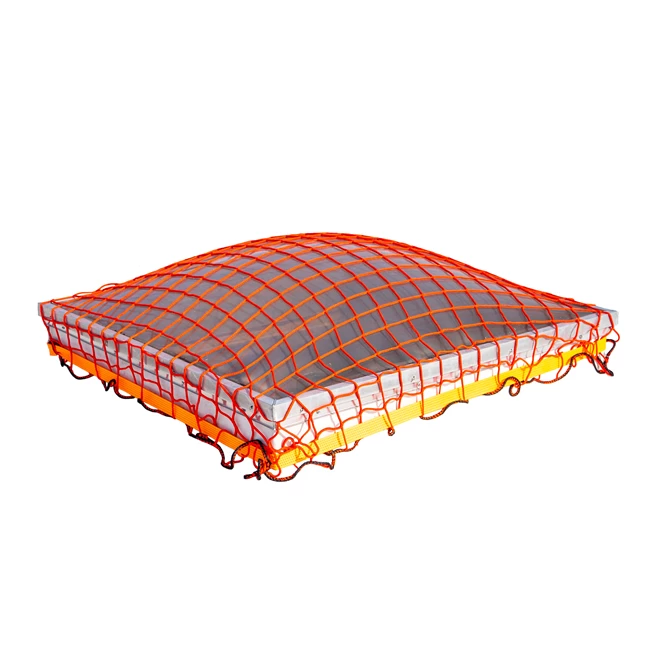
Skylight safety nets are commonly used during construction, roof replacement, and maintenance projects where temporary protection is needed.
Unlike rigid screens or guardrails, safety nets are designed to catch a worker if a fall occurs. Depending on the system, netting may be installed over or beneath a skylight opening.
Temporary skylight netting may be appropriate for:
- New commercial and industrial construction
- Warehouse and manufacturing facility reroofing
- Skylight removal and replacement
- Maintenance projects involving exposed skylight openings
Properly selected and installed skylight nets can protect multiple workers without requiring individual tie-offs, where permitted by applicable regulations. Cal/OSHA requires weekly inspections by a competent person, daily visual inspections by a trained, authorized person before the nets are relied upon, and worker training that includes rescue procedures. Nets must also provide adequate clearance and be maintained according to manufacturer instructions and applicable requirements.
What Are Cal/OSHA’s Skylight Fall Protection Requirements?
California has specific regulations addressing skylight fall hazards. Under Cal/OSHA Title 8, Section 3212(e), workers approaching within six feet of a skylight generally must be protected from falling through the skylight or opening.
Cal/OSHA identifies several permitted protection methods, including skylight safety screens, guardrails, compliant covers, personal fall protection systems, and skylight safety nets. Each system must meet applicable strength, installation, and safety requirements.
Cal/OSHA also requires skylight nets to be removed when the job ends or within one year, whichever comes first.
For temporary roof and skylight openings during construction, Cal/OSHA Section 1632 specifies protection using temporary railings with toeboards or covers. The regulation refers to Section 3212(e) for the protection of existing skylights. The appropriate protection system depends on the type of opening, the work being performed, roof conditions, and applicable regulations.
How to Choose the Right Skylight Protection System
The best solution depends on how often workers access the roof, the type and dimensions of the skylight, available installation space, and whether protection is needed permanently or temporarily.
For facilities with recurring rooftop maintenance, permanent screens or guardrails may offer a practical long-term solution. For construction and reroofing projects, temporary protection may be more appropriate.
A site-specific evaluation can help determine which system provides suitable protection while accommodating existing roof conditions and planned work.
Need Help Choosing a Skylight Fall Protection System?
CH Bull helps facilities and contractors throughout Northern California evaluate skylight hazards and select appropriate fall protection solutions. From site evaluations to turnkey installations and fall protection training, our team can help you create a safer rooftop working environment.